Student athletes are expected to play their way into higher education, now they may have a chance to do so
Trae Dieye
(Originally released for JRN272: Feature Writing Current Affair)
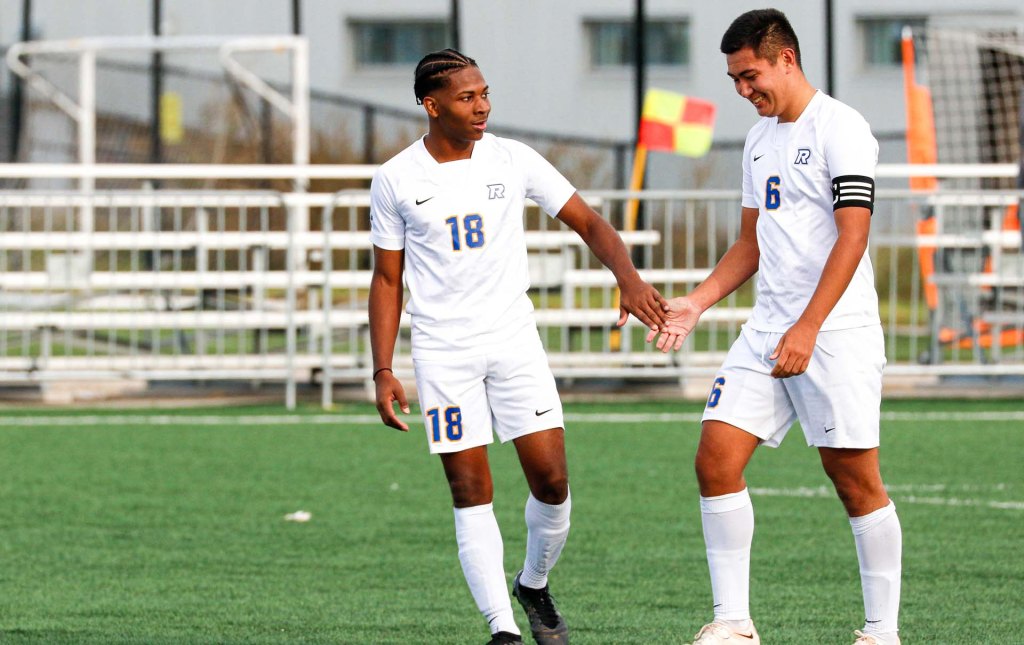
Jaden Yearwood moved to Canada with education as his priority and failure was never an option he could afford. But after settling into life at Toronto Metropolitan University in Toronto and joining the varsity soccer team as a walk-on through open tryouts, Jaden ended up on academic probation in his second semester of university and had to give up on his sports passion. Players on probation are not allowed to play. Not only that, Yearwood would have had to secure housing in Toronto to take classes over the summer to stretch out his course load, at the cost of yet another couple of thousand dollars, which was financially untenable for the Caymanian athlete. Moreover, for a domestic student, the cost of a failed course can run up to 1000 dollars. For Yearwood and international students like him, the costs can easily be double that.
“Most players on the team leave early to play professionally or take a reduced course load to stay on top of their schedule, graduating later. For me, that wasn’t an option,” said Yearwood, a lanky 20 year-old with an uncanny resemblance to a young Deion Sanders, the American football coach and former player.
“At some point, something always gives. There’s always a time where you have to pick between studies and sports.”
Jaden Yearwood
But now, as he prepares to enter his third year, Yearwood is confident things will change. That’s because U Sports, Ontario’s governing body for varsity athletes, dropped academic requirements for scholarship eligibility across all programs last September, leaving the impact of academic performance on players in the hands of universities and their individual program requirements.
This decision affects more than 10,000 athletes across Canada every year, who were previously required to have an average of 80% in high school to be eligible for athletic scholarships and maintain at least a 60% average through their college careers to keep them. The policy had been active since June 2001, when the Canadian Interuniversity Sports was nationally unified. Now, student athletes will no longer have to lose time on the field or reduce their course loads – stretching out how long it took to complete a degree – to maintain their financial eligibility. As a result of the U Sports change, universities will be able to handle scholarship eligibility on a case-by-case basis.
For many athletes and coaches, this decision was long overdue as these requirements were an added source of pressure for incoming and current athletes who had to sustain higher grades to maintain their eligibility for scholarships regardless of their academic standing within their program. Before the new policy was put in place, failed classes led to an automatic suspension of scholarships and reduced course loads were often encouraged to fulfill the heavy time demands of training and travel for varsity programs, according to both Yearwood and Jamilah Christian, who plays varsity basketball at Toronto Metropolitan University.
Paul Zazenski, a head soccer coach at James Madison University in Virginia whose program scouts players in Canada and the United States, said the scholarship policy will mean some Canadian athletic prospects choose to stay in the country rather than seek scholarships abroad with less demanding academic requirements . “More student athletes would stay in Canada due to receiving scholarship,” he said, adding that sports programs in the United States are still likely to be a draw for the cream of the crop. “ The top players in Canada would still be considering professional soccer or top Division 1 soccer in the United States”. Zazenski elaborated on why he sees the policy affecting the second tier of student athletes rather than top prospects. “Money is always a factor but it really just depends on the player’s academic and athletic level of play. If a player is that high level of a player, this conversation might not be relevant because they would be receiving a full scholarship to play in the US”. He said U Sports is following in the National Collegiate Athletics Association (NCAA)’s footsteps, with domestic athletes that weren’t top prospects coming out of high school potentially getting financial support entering their programs without demanding academic requirements beyond their programs’ requirements like the previous policy that encouraged prolonged paths to education or early withdrawal to play professionally. However, there is still a long way to go. “James Madison has some of the best student athlete support systems in the country,” says Zazenski. “We support our student athletes with state-of-the-art facilities as well as full time positions within athletics such as a dietitian, sports psychologist, academic advisor, strength and conditioning coach, and athletic trainers specifically for their individual sport.”
Jamilah Christian, a third-year basketball player on Toronto Metropolitan University’s women’s’ team who came out of high school as a highly touted prospect, is very familiar with the impact of the previous U Sports rules. After having her senior year high school recruitment tournament run canceled due to the COVID-19 pandemic in 2020, she joined TMU’s team in 2021 as it was the best program in Ontario at the time following back to back Elite 8 appearances and a core of senior players that would go on to win the championship the next year. Basketball was the main factor in her decision to select a university coming out of high school as a highly touted prospect. To maintain her academic scholarship, she had to drop down to three classes last winter semester to stay on top of her daily practices and workouts, costing her several thousands in tuition because it was past the date to drop classes without financial penalty. It also meant graduating in 2026 instead of 2025.
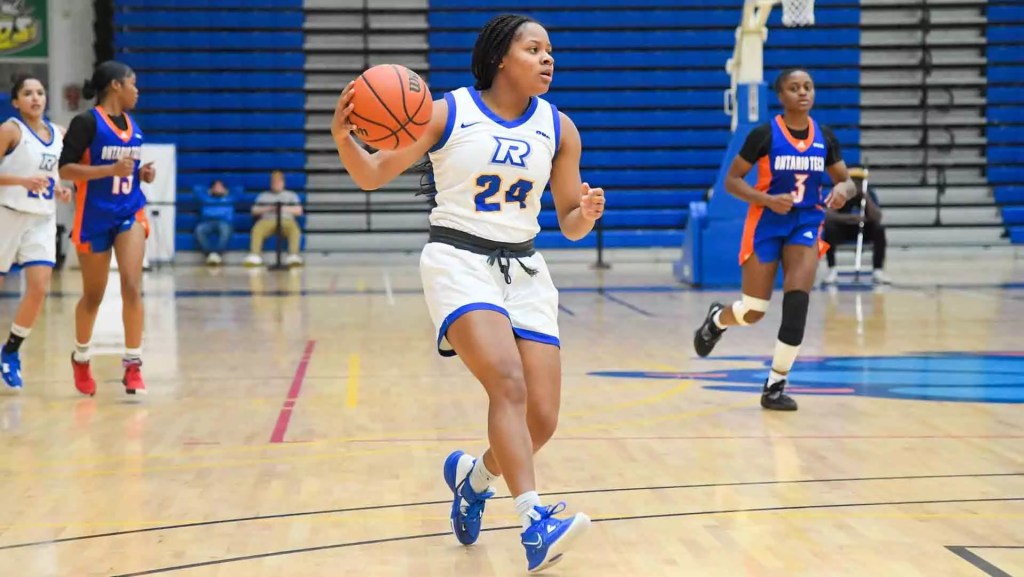
“Coaches and advisors say school is prioritized often but they are not very preventative of poor grades,” Jamilah said. “ The program was designed with performance in mind.” She said she knows of men’s basketball players who have had an even tougher time. “On the men’s team, players on academic probation had their scholarships cut and couldn’t play on their academic probation status, which led to them transferring out”.
With weekly traveling across Ontario and daily conditioning and practice, there is little time left for studying and even less for a social life outside of team bonding, said Jamilah While she received both academic and athletic scholarships, maintaining both has a significant impact on her quality of life. “I have a twin and we’re both playing basketball in university so it is expensive for our parents,” she said. “Scholarships are the difference between living downtown or not for me.”
For varsity athletes, only one hour of study is mandatory and 6 courses are required to maintain eligibility to play throughout the year. This incentivizes reduced courseloads as the silent message is “athletes first, student second”. According to Yearwood, going back home in summer made both a reduced courseload or a failed class an impossible scenario for him and TMU’s team lost a player due to this circumstance. With U Sports dropping academic requirements, Yearwood feels confident heading into his third year that he can come back to the team with an added pressure lifted from his shoulders and a possibility of receiving financial help when he comes back.
With U Sport’s new policy in place, athletic programs across the country may be able to shift their priorities with their talent now being held to the same standards as regular university students.
 Trae Davis